
Federal Custody Serving Aiken
The U.S. Marshals Service controls federal defendants from court-ordered custody through acquittal or release, or until delivery to BOP. USMS commonly uses contract housing. That means a person connected to Aiken may be held outside the county and still remain in federal custody. Research found no dedicated Aiken federal prison.
A departure from the Aiken County Detention Center to USMS is a transfer, not community release. The county record may identify the receiving authority. After a federal sentence and designation, BOP becomes the durable public locator. Before designation, the federal court docket and counsel are often more useful than BOP.
Confirm an Aiken Federal Release
Use the custody stage to choose the source. USMS has no public historical released-prisoner locator. Federal court records can show an order of release, acquittal, detention, or sentencing. For post-conviction custody, search the BOP Inmate Locator, which covers federal records from 1982 to the present.
- Confirm that the matter is federal rather than an Aiken County or South Carolina case.
- Review the federal docket for the controlling custody or release order.
- Search BOP by BOP, DCDC, FBI, or INS number when known.
- Otherwise use full name with optional race, age, and sex filters.
- Read the release date and location together, then check for another authority.
The official locator can show name, register number, age, race, sex, release date, and location. A past date with no facility means BOP says release occurred on that date and the person is no longer in BOP custody.
Aiken BOP Release Record Fields
The BOP result is a federal-system record. It does not prove what happened in an ordinary Aiken jail booking unless federal custody later existed. It also does not provide the whole federal court file or a USMS transport history.
| Field | How to read it |
|---|---|
| Register number | Primary BOP identity key |
| Location | Facility or released status within BOP |
| Release date | Past actual or future projected BOP date |
| Name and traits | Identity comparison fields |
The official BOP records explainer supplies the status meaning. A future date is projected and can change as federal sentence credits are recalculated. Use it as a forecast, not a promise.
The manifest image below comes from the BOP locator and depicts a released-record route.
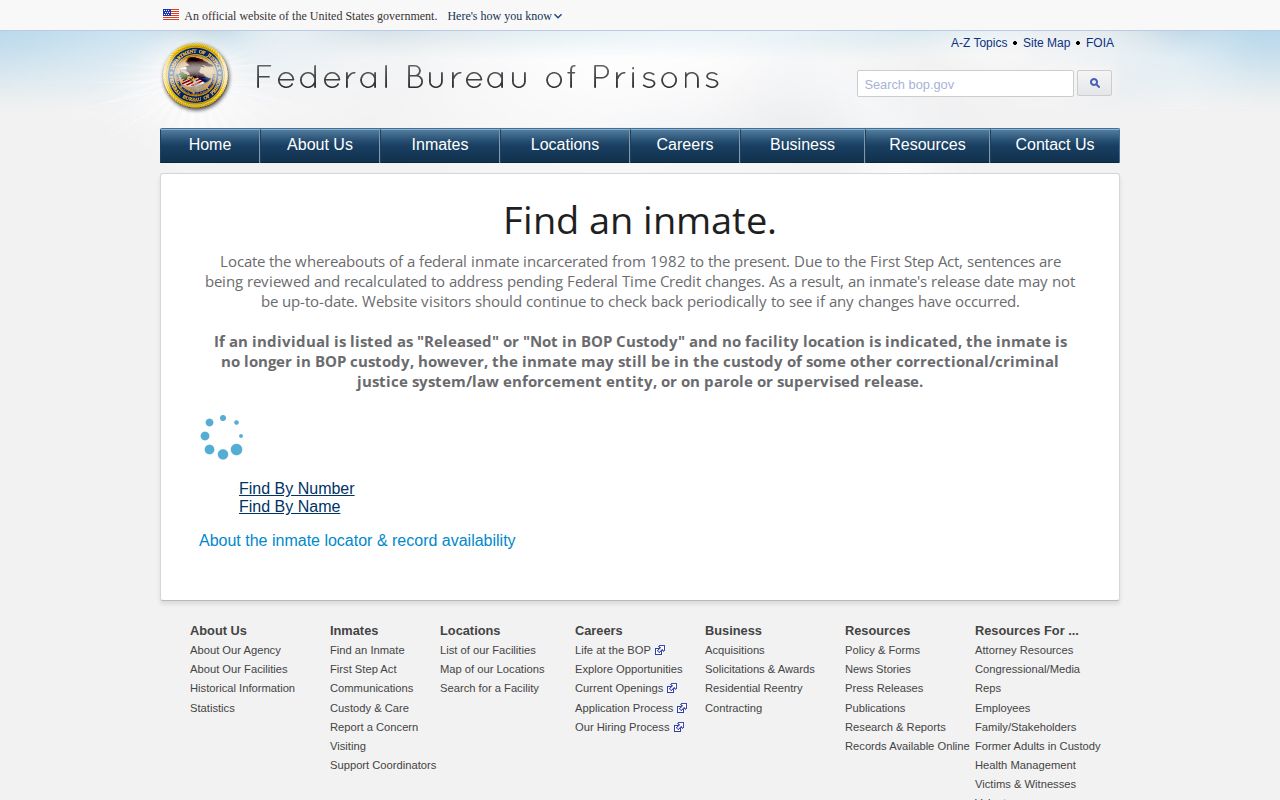
The result must be kept within its BOP boundary, especially when another hold may exist.
Not in BOP Custody
“Released” or “Not in BOP Custody” means the person is outside BOP custody. It does not mean the person is free of every criminal-justice authority. The person may be held by USMS, South Carolina, a county, or ICE. They may also be in the community on parole or federal supervised release.
Federal supervised release is imposed by the court and overseen through the federal probation system. It differs from South Carolina parole and probation. A BOP result does not list every supervision condition. The federal docket is the better source for the judgment and term.
Aiken Federal Record Requests
For the county side of a transfer, request the Aiken release record and ask for destination or receiving agency if releasable. For the federal legal basis, use the federal court docket or PACER. USMS guidance restricts public release of prisoner personal histories, photos, and arrival or departure times, so a request may not yield transport detail.
A focused chain is stronger than a broad request: county exit record, federal custody order, then BOP record after designation. If the county says the person left for ICE instead, use ICE Custody Serving Aiken County. If the path remained state-based, use South Carolina Department of Corrections. The Aiken released-inmate records hub explains the county route.
Aiken Federal Court Trail
A federal court order can explain why USMS custody began or ended. An order granting release may include conditions, but it does not prove when processing finished. A sentencing judgment can identify the prison term and supervised-release term, while BOP computes custody dates after designation. PACER and the relevant clerk provide the official docket route.
Use the case number whenever possible. Review detention orders, release orders, judgments, and later revocation entries as separate events. If a federal defendant was held under contract in a local jail, the jail record documents the local booking and handoff while the federal docket supplies the authority. Neither record alone describes the whole chain.
Aiken Federal Date Changes
A future BOP release date can change as sentence credits are recalculated or a court changes the judgment. A detainer may affect the destination after BOP custody ends. Check the date close to the expected event and read it with the location field. Past Released information is historical within BOP, not a forecast of present location.
Federal supervised release is not BOP custody. It begins under the court judgment and is managed by federal probation. South Carolina SCDPPPS covers state supervision, not federal supervision. Keeping the agencies separate prevents a state no-match from being mistaken for the end of a federal term.
Federal Records and Limits
USMS restricts prisoner personal histories, photos, and arrival or departure details. A broad demand for transport history may produce little public material. Ask for the specific releasable record that answers the custody question. The federal docket, BOP locator, and county transfer record have different scopes.
BOP records begin in 1982. An older federal case may require archival court research rather than the online locator. For a post-1982 record, search identifiers first and retain the register number for follow-up. When the locator says released, note both the displayed date and the date the result was checked.
Check Aiken Federal Custody Orders
A federal court order can explain why USMS custody began or ended. An order granting release may include conditions, but it does not prove when processing finished. A sentencing judgment can identify the prison term and supervised-release term, while BOP computes custody dates after designation. PACER and the relevant clerk provide the official docket route.
Use the case number whenever possible. Review detention orders, release orders, judgments, and later revocation entries as separate events. If a federal defendant was held under contract in a local jail, the jail record documents the local booking and handoff while the federal docket supplies the authority. Neither record alone describes the entire chain.
Recheck Aiken Federal Release Dates
A future BOP release date can change as sentence credits are recalculated or a court changes the judgment. A detainer may affect the destination after BOP custody ends. A release date should therefore be checked close to the expected event and followed by the location field. Past “Released” information is historical within BOP, not a forecast of present location.
Federal supervised release is not BOP custody. It begins under the court’s judgment and is managed by federal probation. South Carolina’s SCDPPPS search covers state supervision, not federal supervision. Keeping those agencies separate prevents a state no-match from being mistaken for the end of a federal term.
Older Aiken Federal Release Records
USMS restricts prisoner personal histories, photos, and arrival or departure details. A broad demand for transport history may therefore produce little public material. Ask for the specific releasable record that answers the custody question. The federal docket, BOP locator, and county transfer record are public-facing sources with different scopes.
BOP records begin in 1982. An older federal case may require archival court research rather than the online locator. For a post-1982 record, search identifiers first and retain the register number for follow-up. When the locator says released, note both the displayed date and the date the result was checked.
Public Record Search
Sponsored Results